CLARITY BEFORE CRISIS
Discover the Costs and Benefits of Making a Home Senior Friendly
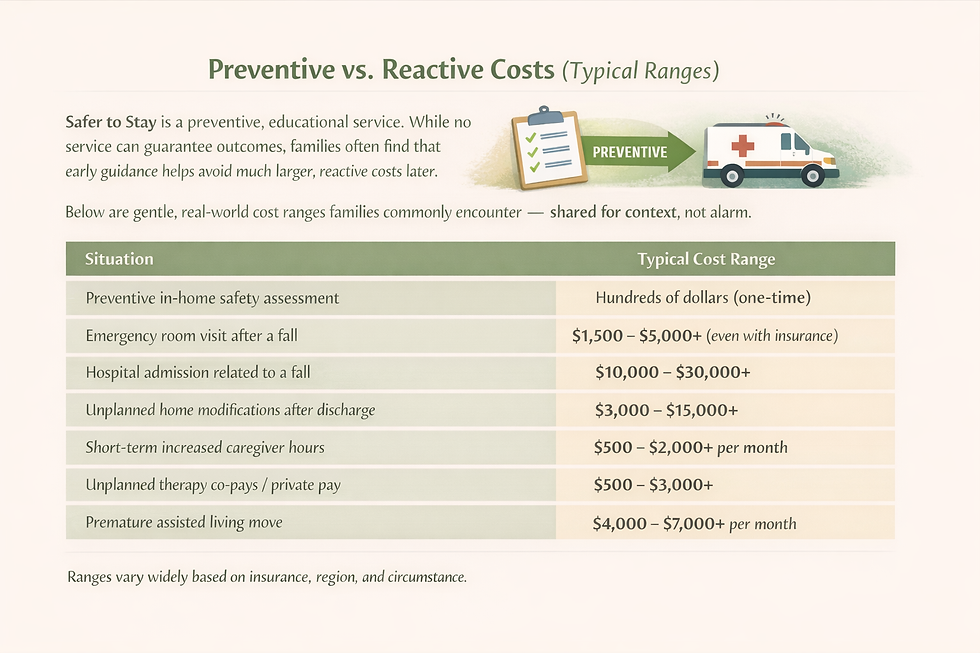
Preventing an injury is always a more affordable path than reacting to one. By addressing safety risks before they escalate, you avoid the compounding costs of emergency care and rehabilitation, ensuring your legacy is preserved for the things that truly matter.
A proactive home safety assessment is a logical step for families who value both health and financial stability. It provides you with a clear roadmap to modify your environment intentionally, rather than making costly, hurried decisions during a medical emergency.
The Cost of Waiting
- Hospital & ER Visit Costs
- Inpatient Rehab or Facility Stays
- Expensive Emergency Modifications
- Unexpected Professional Caregiving
The Proactive Choice
- Doctor of Physical Therapy Assessment
- Planned, Cost-Effective Modifications
- Sustained Independence at Home
- Preserved Family Savings
Prevention is the most ethical and financial way to age in place.
Safer to Stay saves money indirectly by reducing the likelihood of:

Proactive Prevention
Hospitalizations Triggered by Home Injuries
Falls and home injuries are a leading cause of:
- Hospital admissions
- Complications related to immobility
- Extended recovery times
Reducing environmental risk lowers the chance of cascade events that drive higher medical costs.
FINANCIAL CLARITY
Emergency Room Visits After Falls
Even a “minor” fall often leads to:
- ER evaluation
- Imaging (CT scans, X-rays)
- Observation stays
- Ambulance transport
These costs can add up quickly — even with insurance — through deductibles and co-pays.
Preventive safety adjustments are often far less costly than a single ER visit.


Financial Awareness
Unplanned Therapy Episodes
Skilled therapy is valuable — but unplanned therapy often comes with:
- Transportation costs
- Missed work for family members
- Co-pays or private-pay sessions once insurance caps are reached
Addressing risks early may reduce the need for reactive therapy or shorten future episodes.
Expensive, Last-Minute Home Modifications
After a fall or hospitalization, families often face:
- Rushed contractor decisions
- Premium pricing
- Modifications that aren’t well thought out or properly used
Early guidance allows families to:
- Plan changes gradually
- Prioritize what actually matters
- Avoid unnecessary or ineffective upgrades
Avoidable Caregiver Burnout Costs
When environments aren’t safe, families may need to:
- Increase paid caregiver hours
- Take unpaid time off work
- Step in more frequently to prevent accidents
Small environmental or routine changes can reduce caregiver strain and long-term expense.


Premature Moves to Higher Levels of Care
Falls and safety incidents are a common trigger for:
- Assisted living
- Skilled nursing
- Memory care transitions
Supporting safer independence at home may delay — or better prepare families for — these transitions, which often carry significant monthly costs.
Expert Selection
Duplicate or Unnecessary Purchases
Without guidance, families may buy:
- Equipment that doesn’t get used
- Items that don’t fit the space or the person
- Products that create new safety risks
Independent recommendations help families make fewer, better-informed purchases.